How deep does stump grinding go?
Most residential grinding goes about 6 to 12 inches below the surface. That depth is enough for grass or a garden bed. For a new tree or building, ask for deeper grinding.
Request your stump grinding estimate
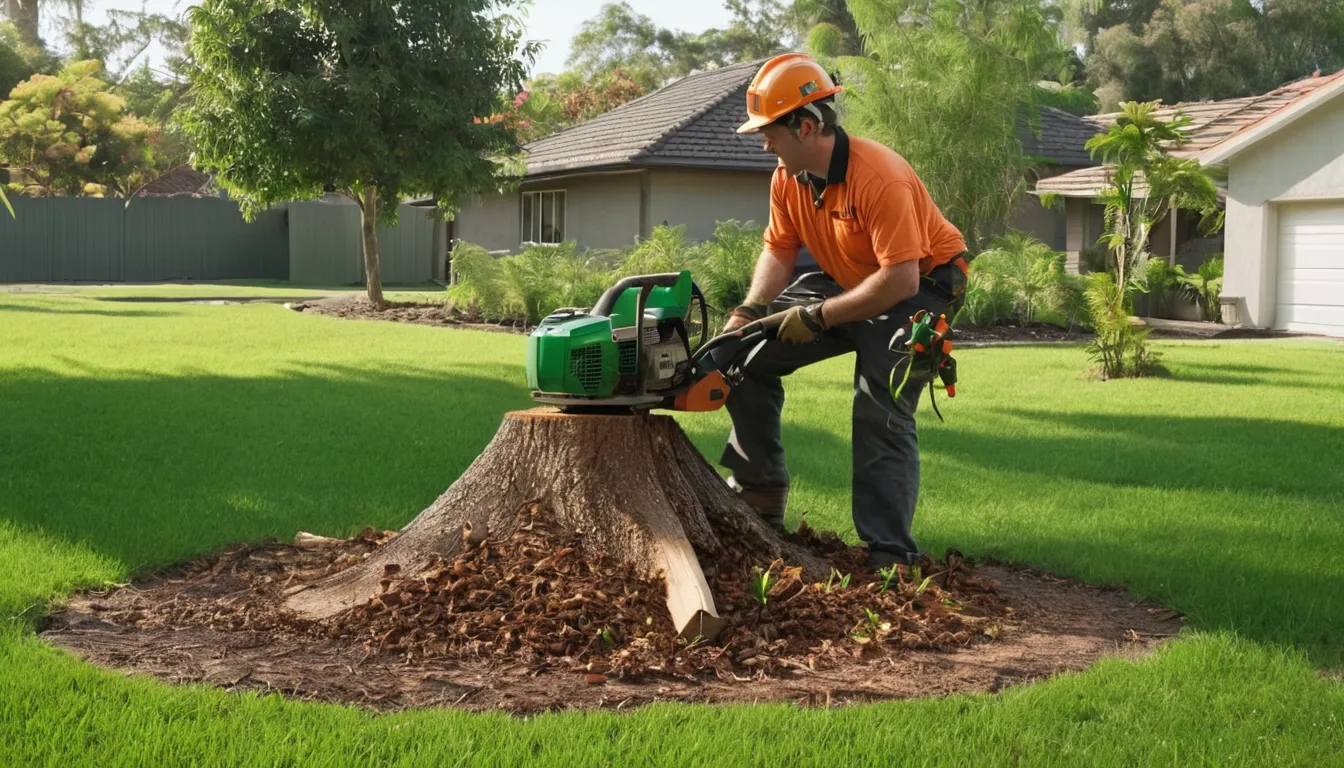
Stump grinding is the job that comes after a tree is down. A machine with a spinning, toothed wheel shaves the stump into wood chips, below ground level. The yard ends up flat, safe, and ready for grass, a garden, or a new tree.
Abclunch Tree Service is a referral service. We do not grind stumps. We explain the process, collect your job details, and connect your request with independent providers in our network. They visit, quote in writing, and do the work. This page covers what a first-timer should know: the hazards, the method, the price drivers, and how to prepare. Details first, quotes second.
A stump looks harmless. It is not always. In a humid climate with near-daily summer storms, stumps rot, sprout, and hide pests fast. Grinding is the usual fix.
Here is the plain definition. Stump grinding means cutting the stump down into chips, usually several inches below the soil. The roots stay in the ground and break down over time.
Storm tree clearance often leaves ragged stumps with split wood and sharp edges. If a tree fell recently, keep kids and pets away from it. Ask the provider about storm-related cleanup when you request an estimate.
A low stump hides in tall grass. People trip. Mowers hit it and throw debris. If the stump sits near a walkway, driveway, or play area, treat it as a priority.
Roots near a concrete block home or a slab can crowd walls, pipes, and walkways. A provider can look at the layout before cutting. Do not dig around the stump yourself.
Heat and humidity speed up decay. Rotting wood attracts termites, carpenter ants, and fungus. Pests in a stump can spread to nearby wood.
Many species send up shoots from the stump and roots. Cutting them back only works for a while. Grinding removes the part that feeds the shoots.
A stump blocks mowing, planting, and fencing. Grinding gives that space back.
The grinder has a steel wheel with carbide teeth. The operator sweeps it side to side across the stump and lowers it a little at a time. Most residential stumps are ground 6 to 12 inches down.
The result is a mound of mulch-like chips. Some providers haul them away. Others leave them for you to use or spread. Ask which one is included in the quote.
If you want to confirm provider availability for your area, Request a callback to check provider availability.
Grinding leaves roots to decay. It is quicker and does less damage to the lawn. Stump removal pulls out the stump and major roots with heavy equipment. It costs more and leaves a bigger hole.
For most yards, grinding is enough. Choose removal if you plan to build over the spot or need a deep root system out.
Providers usually price by stump width, measured across the top. Other factors matter too:
Always get a written quote that lists what is and is not included.
Irrigation lines, cable, and drain pipes can sit near roots. Share what you know with the provider. Utility locating may be needed before any digging or deep cutting.
Move cars, patio furniture, and toys. Make sure the machine can reach the stump. Rocks, wire, and old fence hardware near the stump can damage the teeth, so point them out.
An old stump is still grindable. Even if it is hard, dry, or half rotted, the process is the same. Very old stumps may be softer, but hidden stones or dirt in the wood can slow the work. Mention the age when you request an estimate.
Fill the hole with the chips and topsoil, or have the provider haul the chips away. Settle the soil for a few weeks before laying sod or planting. Watch for new shoots and trim them early. Wood chips can also be spread as mulch away from the house.
Request, compare, decide. Know before you hire.
Providers grind the stump below ground level into wood chips with a toothed wheel.
Surface roots near the stump can be ground too, if you ask for it in the quote.
Many quotes cover raking up chips and loose debris. Confirm what is included in writing.
A provider looks at access, roots, and nearby lines before work starts, so surprises stay small.
Prices vary by stump width, access, and region. These are typical U.S. ranges only. Real quotes depend on your yard, so get a written estimate before you agree to any work.
| Item | Typical range | Notes |
|---|---|---|
| Small stump (under 12 in.) | $100 – $250 | Easy access, one stump |
| Medium stump (12–24 in.) | $150 – $400 | Most common home size |
| Large stump (over 24 in.) | $300 – $800 | Big roots add time |
| Minimum service fee | $100 – $200 | Applies to very small jobs |
| Chip haul-away | $75 – $300 | Depends on volume and distance |
| Full stump removal | $350 – $1,000+ | Pulls stump and major roots |
Share the stump size, where it sits, and how a truck or grinder can reach it. Add photos if you have them. Short, clear details help a provider give you a more accurate estimate.
Independent providers respond with price and scope. Check what each quote includes.
Choose the one that fits your budget and schedule. Confirm the plan in writing.
The provider grinds the stump, handles the chips as agreed, and walks the site with you.
You describe the stump once. Independent providers in our network then respond with written, itemized estimates.
Each term is explained simply, so first-timers know what to expect.
Requesting an estimate carries no obligation. Compare options at your own pace.
Requests go to independent providers who know local soil, storms, and yard layouts.
Send a request with your address and a few photos. Abclunch Tree Service passes it to independent providers near you. You compare quotes and choose, with no obligation.
No obligationMost residential grinding goes about 6 to 12 inches below the surface. That depth is enough for grass or a garden bed. For a new tree or building, ask for deeper grinding.
Usually you can fill the hole with soil and plant, but chips settle and break down. Many providers suggest removing most of the chips or waiting a few weeks before laying sod.
No. Grinding shreds the stump into chips and leaves roots to decay. Removal pulls out the stump and major roots. Removal costs more and leaves a larger hole to fill.
Send a request with your address and a few photos. Abclunch Tree Service passes it to independent providers near you. You compare quotes and choose, with no obligation.
No obligation