How much does it cost to remove a tree?
Typical U.S. prices run from about $150 for a small tree to $3,500 or more for a large one. Access, height, and nearby structures change the total, so get a written quote before work starts.
Request your estimate today
Removing a tree is a big job, and most homeowners only face it once or twice. The tree may be dead, leaning, too close to the house, or damaged by a storm. Abclunch Tree Service explains the process in plain terms so you know what to expect before anyone shows up.
Here is how it works. You send the details: tree size, location, and any damage. Abclunch Tree Service connects your request with independent providers in the Clearwater area. Abclunch Tree Service does not do the work itself. The provider you choose does. You compare estimates, ask questions, and decide with no obligation. Details first, quotes second.
Tree removal is the safe cutting down and hauling away of a whole tree. Crews usually cut it in sections and lower each piece to the ground. This page walks you through the process in order, starting with what is most urgent.
Some situations cannot wait for a normal schedule. Treat the tree as urgent if you see any of these:
Stay clear of the tree and anything it touches. Treat downed lines as live and keep everyone away. Take photos from a safe distance. Then request an estimate and describe the damage. Many providers can respond quickly to storm tree clearance, but availability varies.
Most removals fall into a few groups. The tree is dead or dying. It is diseased and could drop limbs. Roots are lifting a slab, pool deck, or drain line. Or it simply stands too close to the roof.
In humid, stormy regions, trees also grow fast and get tested often. A tree that looked fine last year can become a risk after a wet season.
The process is simple once you know the stages.
The provider looks at the tree, the yard, and what stands nearby. This is where the size, access, and risk are judged. Ask for a written quote that lists exactly what is included.
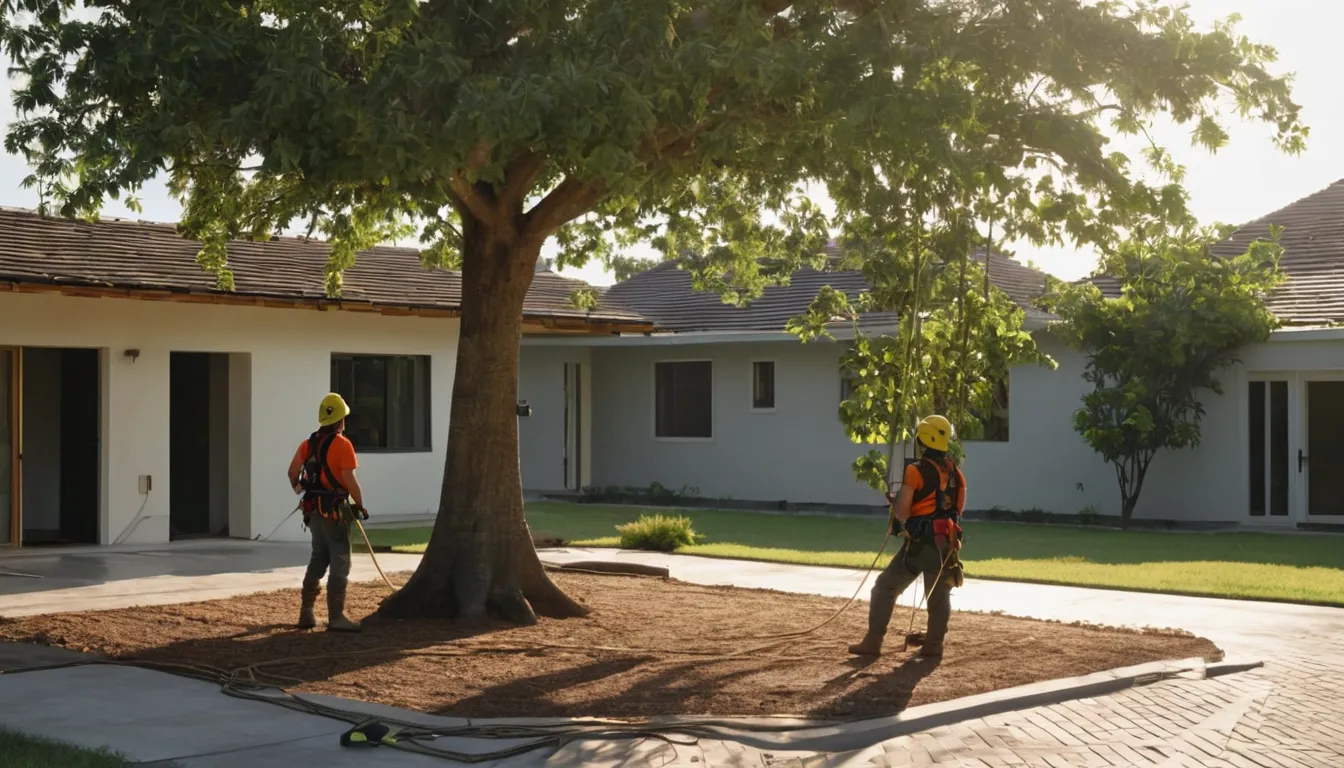
Crews climb or use a lift to take the tree down in pieces. Ropes lower heavy sections so they do not hit the roof, fence, or lawn. Open yards allow a faster job. Tight lots take longer.
Branches are chipped and logs are cut up. Many quotes include hauling the debris away, but not all do. Confirm this before you agree to anything.
Four things drive most quotes: tree height, trunk width, how hard the tree is to reach, and what sits underneath it. A tree over a roof costs more than one in an open yard. Dead wood can be riskier to cut, which can raise the price too. Costs vary by job, so get a written quote.
Some cities and neighborhoods protect certain trees, especially large or native ones. Condos and subdivisions may also require approval from an association. Rules differ by location, so check with your local city office or association before cutting. A provider can often tell you if a permit is likely.
Do not pick on price alone. A low number can hide missing insurance or a thin scope of work.
Compare at least two written estimates. Know before you hire.
A little prep keeps the job smooth and safe.
Walk the yard with the provider. Check the roof, gutters, and fence for new damage. Decide what to do with the wood. Some homeowners keep logs for firewood, and others have them hauled off.
You will also have a stump. Leaving it is allowed, but it can attract pests and regrow in warm, wet climates. Ask about options when you request your quote.
In regions with frequent summer storms and a long hurricane season, it pays to act early. Have weak or dead trees checked before the season starts. Providers get busy after a big storm, and waiting lists grow.
If damage hits, some policies may cover sudden damage from a fallen tree. Check your policy. Providers can often help document damage for a claim.
Request a callback to check provider availability, or send your details through the request form. Either way, you decide whether to hire.
A provider inspects the tree, the access route, and nearby structures before giving a written estimate.
Crews take the tree down in controlled pieces to protect your roof, fence, and yard.
Branches and logs are chipped or hauled away. Confirm this is listed in your quote.
Ask if the stump stays, is cut low, or is ground down as a separate item.
These are typical U.S. ranges. Your price depends on tree size, access, and what is nearby. Use the table as a rough guide, then compare written quotes from more than one provider.
| Item | Typical range | Notes |
|---|---|---|
| Small tree (under 30 ft) | $150 – $600 | Easy access keeps the price low |
| Medium tree (30–60 ft) | $500 – $1,500 | Most common residential job |
| Large tree (over 60 ft) | $1,200 – $3,500 | Extra crew and equipment |
| Crane-assisted removal | $1,500 – $5,000 | Used near homes or power lines |
| Debris haul-away | $100 – $400 | Sometimes already in the quote |
| Permit or arborist report | $50 – $400 | Only where local rules require it |
Tell us the tree size, its location, and any damage or leaning you see.
Independent local providers read your details and may reach out to schedule a visit.
Check scope, cleanup, insurance proof, and price side by side before choosing.
Pick the provider you trust and agree on a date for the removal.
You describe the job once, so providers can quote from real information.
Terms are explained once, in simple words, for first-time hirers.
Requests go to independent providers who know area trees, storms, and rules.
Compare estimates and decide on your own schedule.
Send a request with your address and a few photos. Abclunch Tree Service passes it to independent providers near you. You compare quotes and choose, with no obligation.
No obligationTypical U.S. prices run from about $150 for a small tree to $3,500 or more for a large one. Access, height, and nearby structures change the total, so get a written quote before work starts.
Sometimes. Some cities protect larger or native trees, and associations may require approval. Rules vary, so check locally before cutting, and ask the provider whether a permit is likely.
Request estimates from a few independent providers. Ask for proof of liability insurance, a written scope that includes cleanup, and a clear plan to protect your home. Then compare, and choose the one you are comfortable with.
Send a request with your address and a few photos. Abclunch Tree Service passes it to independent providers near you. You compare quotes and choose, with no obligation.
No obligation